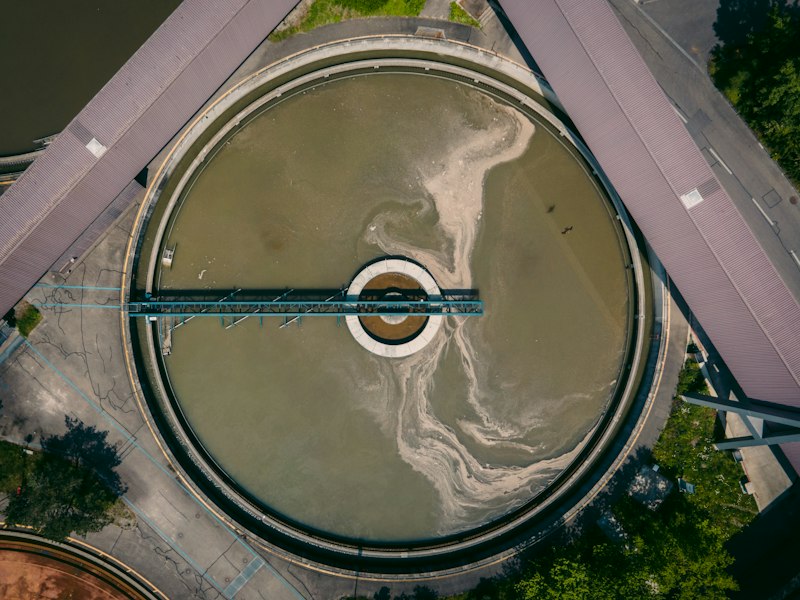
The Philippines has over 1,200 registered municipal and industrial sewage treatment plants (STPs). A 2022 DENR audit found that over 40% of audited STPs exceeded ammonia discharge limits at least once during the monitoring period, largely due to load variability and the difficulty of maintaining stable nitrifying bacteria populations.
The Nitrification Bottleneck
Ammonia removal in activated sludge STPs depends on a two-step nitrification process. Nitrosomonas europaea oxidises ammonium to nitrite in the first step; Nitrobacter winogradskyi then oxidises nitrite to nitrate. Both organisms are chemolithoautotrophs that grow slowly and are sensitive to temperature, pH, and toxic inhibitors. When an STP receives a shock organic load or maintenance shutdown, ammonia removal capacity collapses — sometimes for 2–6 weeks while the population naturally recovers.
STP-TEK as a Recovery and Augmentation Tool
STP-TEK provides a concentrated, active Nitrosomonas europaea inoculant that compresses the recovery timeline from weeks to days. Dosed at 2.0 kg per million litres per day during recovery events, it seeds the aeration basin with a high-density population that establishes immediately, supplementing the surviving native nitrifier community. The practical result: 20–40% improvement in effluent ammonia within 72 hours of dosing.