+63 966 079 0909
  aabiotek@gmail.com
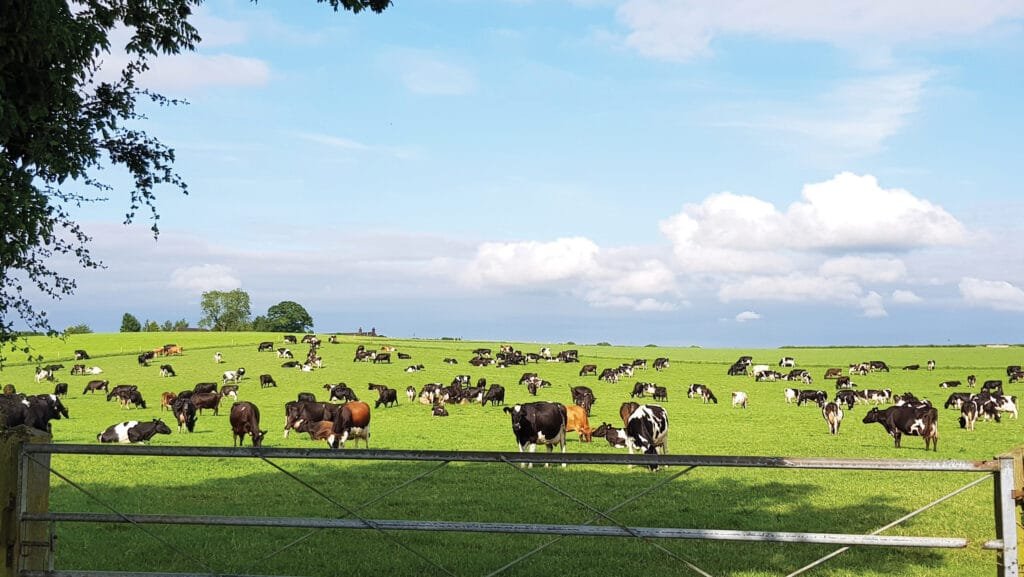
In the rolling pastures of Staffordshire, dairy farmer Steve Brandon reflects on a pivotal decision that transformed his family’s livelihood. Thirty years ago, inspired by a British Grassland Society conference, Steve embarked on a journey to implement rotational grazing—a move that revolutionized his approach to dairy farming and influenced the UK’s agricultural landscape.
A Bold Shift in Dairy Farming
The 1990s brought an influx of New Zealand consultants, spearheaded by the late Jerry Ryder, who introduced the concept of rotational grazing to the UK. This system prioritizes simplicity, cost efficiency, and sustainability, helping farmers like Steve achieve a better work-life balance while improving profitability.
“We were making money, but not as much as we thought,” Steve recalls. His traditional six-month calving system felt labor-intensive and inefficient. Hearing Irish dairy farmer Mike Murphy speak about managing production costs inspired Steve to adopt rotational grazing at New Buildings Farm, Staffordshire.
Building a Rotational System
Initially skeptical, Steve divided his 180-cow Holstein herd’s grazing area into 10 paddocks. “After a few years, we realized we should have started with the recommended 25 paddocks,” he admits. Today, his farm boasts 52 paddocks spanning a 170-hectare grazing platform. Tracks made from concrete or railway sleepers ensure cows can access grass even during wet seasons, further optimizing the system.
By 2000, Steve transitioned to spring block calving, a strategy allowing all 200 cows to calve within a concentrated period. This shift streamlined operations and aligned with his goal of reducing costs. “Access is the key to everything,” he emphasizes.
Learning and Sharing Knowledge
Steve’s journey of transformation accelerated after joining a discussion group led by New Zealand consultant Paul Bird. This group encouraged farmers to share financial data and visit others undergoing similar transitions. “Being open about finances was radical at the time,” Steve notes. “But it was essential for growth.”
Steve’s willingness to share insights and learn from peers positioned him as a leader in the grazing-based farming community. His collaboration with fellow farmer Robert Craig led to the establishment of a joint venture in Cumbria, creating a successful spring block-calving herd of 500 crossbred cows.
Expanding the Business
Steve’s farm grew from 101 hectares to 202 hectares, with cow numbers stabilizing at 400. The family’s emphasis on sustainability and profitability attracted the next generation. Steve’s daughter, Lucy, left her career as a land agent to join the farm with her husband, James. Together, they embraced rotational grazing, maintaining a balance between family life and farming demands.
“I didn’t want to hold onto the checkbook until the day I die,” Steve says. He gradually handed over responsibilities, allowing Lucy and James to invest in machinery, labor, and eventually the herd itself.
The Role of Discussion Groups
For many farmers, discussion groups provided a lifeline during the transition to rotational grazing. Pete Wastenage of Wastenage Farms in Devon credits such a group with saving his family’s business. “We wouldn’t have made enough profit to expand without it,” he says.
Pete’s parents faced criticism for adopting crossbreeding and rotational grazing, but the results—improved cow health and profitability—vindicated their choices. Today, Wastenage Farms encompasses eight dairy units with a combined 2,880 cows, all managed using principles learned from the group.
A Sustainable Future
Rotational grazing prioritizes cost control, allowing farmers to reduce reliance on external inputs like feed and housing. Steve highlights the importance of visiting diverse farms to glean new ideas. “You learn from everyone,” he says. “Profit gives you choices, and I’m happy with what we’ve achieved.”
By embracing rotational grazing, UK dairy farmers are not only improving their bottom lines but also paving the way for sustainable, resilient agriculture. As Steve’s story illustrates, the benefits extend beyond profitability—encompassing family legacy, community collaboration, and environmental stewardship.
Call to Action
Discover how AA Biotek’s innovative solutions can further enhance sustainable farming practices. Explore our range of probiotics designed to support livestock health and optimize pasture productivity. Together, we can build a thriving future for agriculture. Visit our website today!
References
- Ryder, J. (1995). Grazing systems: A New Zealand perspective. British Grassland Society Proceedings.
- Murphy, M. (1990). Cost control in dairy farming. Irish Dairy Journal.
- Bird, P. (2001). Financial transparency in farming: The discussion group model. Agricultural Economics Review.