
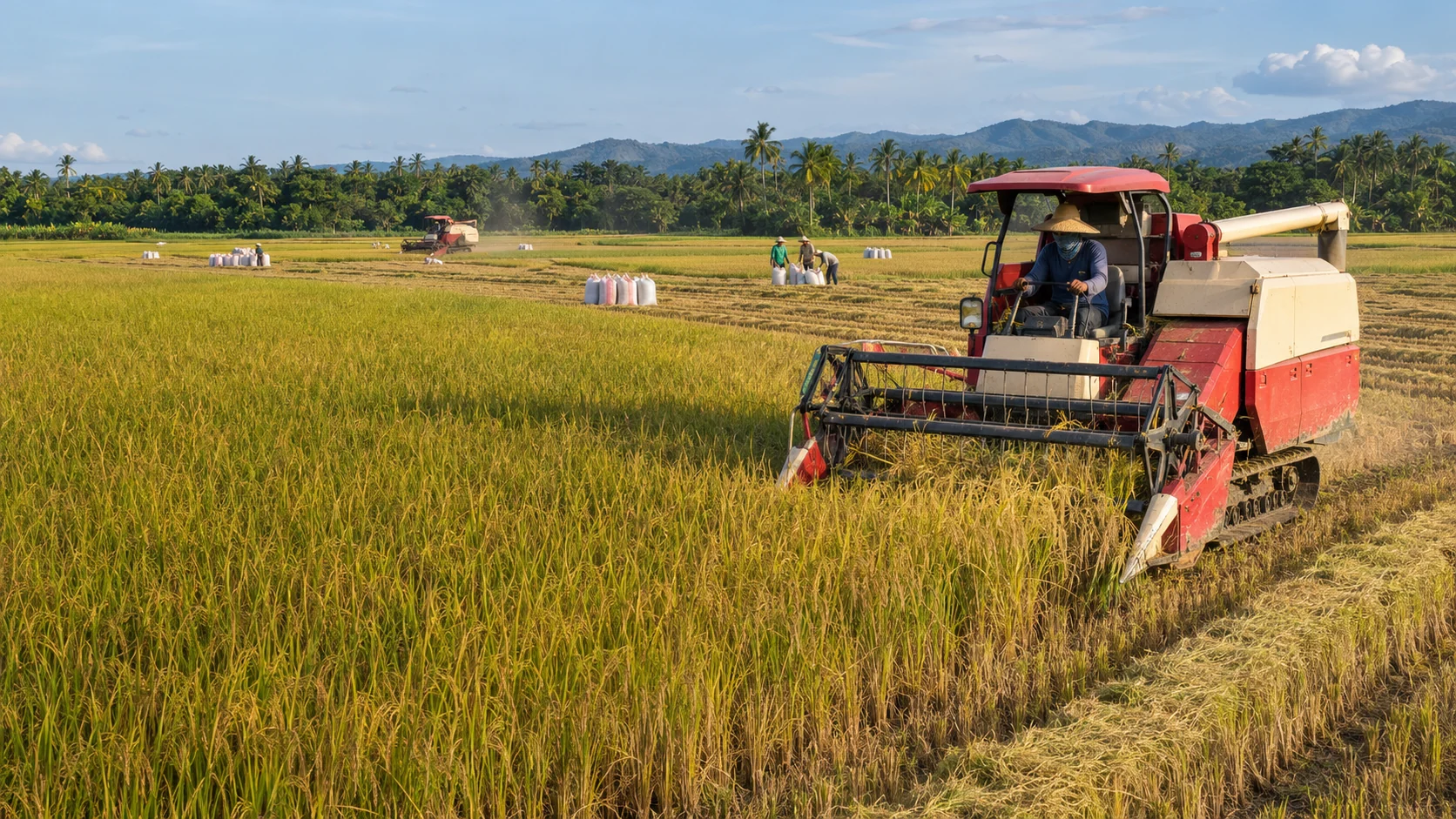
Soil Health and Crop Productivity in the Philippines
A practical guide to soil testing, crop nutrition, biological inputs, and field trials for Philippine growers, with ASEAN and global context.
When fertilizer costs rise but harvests fail to improve, the immediate temptation is to look for a cheaper bag or apply more of what is already on hand. The better first investment may be to find out what is holding the crop back. A root zone that stays waterlogged can limit uptake even when nutrients are present. A good harvest can still lose money when the market rejects small produce. A promising biological input can be impossible to evaluate when the crop variety, irrigation, fertilizer and planting date all change at once. Soil health, crop productivity and profitability become easier to improve when they are treated as related questions with separate measurements.
This guide is for Philippine rice, corn, vegetable and fruit growers, their technicians, and cooperatives planning demonstrations. It describes what to check before buying inputs, how to compare alternatives and how to put promising results to work. The practical unit of decision is a field, crop and season. A national production table can orient a discussion about productivity, but it cannot diagnose what is happening in a particular block.
Philippine challenges: input cost, variable fields and harvest quality
At the local level, the most visible symptom is often uneven growth. Walk across healthy and weak areas before interpreting a soil test. Look for patterns around wheel tracks, low spots, irrigation inlets, old boundaries and slopes. A patch that follows water movement deserves a different investigation from one that follows a seed lot or a fertilizer pass. Dig carefully around roots of healthy and affected plants of comparable age. Write down root depth, branching, discoloration, moisture and whether the soil has a hard layer. Photographs with a date and a consistent scale make a follow-up visit more useful.
Good sampling starts with deciding what area a test should represent. Ask the laboratory or local agriculture office about the sampling depth, handling and number of subsamples for your crop. Keep distinctly different soil or management zones separate. A composite sample can be economical within a reasonably uniform zone, but combining an eroded shoulder with a wet depression can produce a number that describes neither. Save the report with a simple sketch, crop history and fertilizer records. When comparing subsequent tests, use comparable methods and timing.
Define the business outcome before choosing a remedy. A vegetable farm may need more saleable crates, a rice grower may need an improvement in dry-equivalent yield, and an orchard may prioritize fruit grade or tree survival. More fresh weight can reflect moisture, and a greener canopy can coexist with a poor marketable harvest. Philippine Statistics Authority crop, livestock and fisheries data provide context for production differences across the country. A farm budget and field records provide the basis for deciding whether a specific change pays. Philippine Statistics Authority provincial agriculture and fisheries data
ASEAN challenges: scaling across climates and farm sizes
Across ASEAN, practices often travel faster than the evidence describing where they work. A technique developed in an irrigated rice area may be difficult to transfer to a rainfed site with uncertain water deliveries. A vegetable system that relies on several labor-intensive passes can be workable for a small plot and impractical across an entire association. Soil type, access to machinery, drainage and the ability to buy inputs on time can matter as much as the agronomic idea. Regional sustainable agriculture guidance recognizes soil health, efficient use of inputs and the need to adapt practices to production conditions. ASEAN Regional Guidelines for Sustainable Agriculture
A cooperative can reduce this transfer problem by testing a short list of decisions on farms that represent its members. Choose sites on purpose. Include the common soil type, an area with difficult drainage, and a site where labor or irrigation is constrained. Give all sites a common measurement sheet while allowing the local technician to record site-specific circumstances. Report the conditions in which a result appeared and the conditions in which it did not. An association gains more from identifying who can use an approach successfully than from publishing a single average with no context.
Regional market requirements create another practical incentive. Buyers often want steady volume and consistent grades, and growers need a way to record what they applied. A common field sheet that records plot identity, input dates and harvest lot can support both agronomic comparison and traceability. Start with an easy system growers can maintain by hand. Transfer the information to a shared spreadsheet only when the organization has an agreed place to store it and someone responsible for checking missing entries.
Global challenges: soil degradation, weather risk and resilience
The FAO Global Soil Partnership treats soil erosion, organic carbon loss and other degradation processes as distinct threats. That distinction matters on a farm. Erosion removes productive topsoil from some parts of a field while depositing sediment elsewhere. Compaction restricts roots and water movement. Poor drainage and nutrient imbalance can each depress performance even when organic inputs are available. A separate response is needed for each problem. Soil health work benefits from identifying the process responsible for recurring losses, then looking at whether the proposed action actually interrupts it. FAO Global Soil Partnership soil resources assessment
Climate variability raises the cost of mistaken assumptions. A calendar can estimate the usual planting window, but a delayed wet season, flood or heat episode can change both the crop’s demand and the farm’s ability to act. Plan more than one response before planting. If field access fails, identify which operations can wait and which are time-sensitive. If irrigation is restricted, decide which blocks have priority. A record of bad seasons is especially valuable because it reveals where the system has little room for error. That is a better starting point for resilience planning than a good-year yield target alone.
Global soil stewardship also has an accounting implication. A practice that saves purchased fertilizer but sharply raises labor, water or fuel expenses may shift costs rather than reduce them. Similarly, measuring one season cannot establish changes in long-term soil carbon. Pick time horizons that match the claim. Compare short-run input spending and marketable yield during the cycle. Revisit structural indicators, infiltration or organic matter over longer periods using consistent timing and methods. Communicate these outcomes separately when reporting to farmers, lenders or buyers.
Diagnose the first constraint and build an integrated plan
Use a short diagnostic sequence. First identify whether poor stand or restricted rooting can explain the variation. Then check water and drainage, followed by crop nutrition, weeds, disease and pest pressure. These factors interact, so the sequence is a way to avoid missing obvious causes, not a rigid recipe. For example, poor emergence can reduce the crop’s capacity to make use of additional fertilizer. Excessive canopy growth without a marketable response can signal that timing or balance deserves a closer look. Consult local specialists for crop-specific interpretation.
Set a short-term plan around decisions the team can control. Improve irrigation uniformity where it is demonstrably causing wet and dry bands. Stabilize eroding areas using locally appropriate cover or barriers. Match residue retention or compost use to the planting schedule, resource availability and reliable material quality. Use nutrient recommendations based on soil information and realistic crop demand. Have the grower note which practices are already standard and which would represent a new cost. Record expected labor as well as the price of materials so that the economics are visible from the start.
If a biofertilizer or biostimulant might address the remaining problem, specify a testable outcome. A question about establishment might be answered with stand and root observations early in the cycle. A claim about marketable yield needs harvest data. Ask what product is suitable for the crop and intended use, whether it fits the rest of the program, and how it should be stored. Keep the recommended base nutrition program intact in the first comparison unless an adviser has designed a separate, safe nutrient-rate trial. Where evidence supports it, an integrated program can later test reductions in selected conventional inputs while protecting yield and quality.
Run a useful field trial and check the economics
A workable trial compares the existing practice with the same practice plus one deliberate change. Use nearby plots that have comparable soil and management history. Replicate both treatments in multiple blocks where possible, and vary assignment within each block so the better-looking strip does not always receive the new treatment. Flag the boundaries and exclude border rows from harvest comparisons where edge effects may matter. Keep variety, planting date, water and ordinary field operations comparable. A single demonstration strip can show how an operation fits into the workday, but any yield inference should reflect the limited comparison.
Write down the success rule before the first application. For a vegetable crop, separate total yield from marketable yield and use the same grading criteria on both treatments. For grain, record harvest area and moisture so the comparisons use a common basis. Include damaged or unsold produce separately. At a minimum, capture product cost, transport, extra labor and any additional handling. Store the raw weights and dates with the final summary. If somebody repeats the trial, these details are more useful than a percentage displayed without a denominator.
For a simple break-even example, assume the additional cost is ₱1,500 per hectare and the net price received per additional marketable kilogram is ₱20 after incremental harvesting and handling costs. The added practice then needs 75 kilograms per hectare to recover its direct added cost. This is an illustration, not a treatment result. Test the same arithmetic at a lower price and a higher cost. If the practice covers its own cost only under the most favorable assumptions, repetition under normal farm conditions should come before broad adoption.
From a successful plot to a farm-wide decision
Promote a practice in stages. Repeat the comparison in a different season or on another representative block. Check whether the result persists when a different crew carries out the work. If there was a measurable benefit only on well-drained soils, limit initial rollout to that condition. If the cost advantage depended on a buyer paying a premium for a higher grade, check that the buyer and grading system remain accessible. Judge the operational demands as carefully as the agronomic outcome. A practice requiring unusually precise timing may need a simple reminder, a training run or a smaller deployment area.
Retain observations that do not favor the trial as well as those that do. Variable results can reveal a boundary such as water availability, planting stage, input timing or storage conditions. A missing observation should stay marked as missing. When reporting results, describe the comparison, sample size, time frame and average marketable response, followed by the main uncertainties. Ask the local agriculture office, extension worker or crop adviser to help interpret unexpected patterns. This makes the trial useful for the next planting even when the new input falls short of the financial target.
A sensible first step this month is to choose one problem field, one comparable reference field, one decision you can change and one metric worth tracking. Compile the soil information and prior season’s costs, then discuss whether the next investment should be drainage, nutrition, crop protection, a biological input or additional diagnosis. Good records do not have to be elaborate. They have to link an observation to a location, a decision and a result. That link makes it possible to distinguish a practice that worked once from a management approach worth keeping.
Turn the field results into a seasonal budget
Build the next planting budget from the farm’s own records. Begin with the planted area, expected harvest area and marketable yield from several comparable cycles. List seed, fertilizer, irrigation, crop protection, harvest labor and postharvest charges. Separate expenses that stay the same regardless of yield from those that increase when the farm harvests more. That distinction matters when comparing a higher-yielding program with a lower-cost program. The first may earn more revenue while the second may leave more cash at the end of a difficult season.
Record the time at which payments are due. A nutrient practice can be economical at the end of the season and still create a problem if its cost comes before the grower has enough operating cash. A cooperative can use these records to plan pooled purchasing or share access to tools and sampling support. The same budget can show which proposed changes are feasible on a small area without disrupting routine work. Put the expected benefit beside the cash requirement and state the assumption behind each number.
Finally, identify what would trigger another review. A significant change in buyer price, access to irrigation or the cost of basal fertilizer may change the decision. A practice that was financially sound last year can deserve a smaller test this year if the assumptions have changed. Record the decision, date and reason. That makes the budget a tool for managing a crop rather than a retrospective summary of what the farm spent.
Solutions Showcase
AA Biotek's TEK portfolio includes the following products for this category. Check the current label and applicable local requirements, then discuss fit with the AA Biotek technical team.
MycoTEK
Mycorrhizal biofertilizer for the root zone.
Consider for a compatible crop where the trial question concerns establishment or root-zone performance.
View MycoTEK in the catalogNPK-TEK
Bacterial biofertilizer for crop nutrient programs.
Evaluate alongside a soil-test-based nutrient plan and compare marketable yield and cost per hectare.
View NPK-TEK in the catalogVeggieFloraTEK
Bacterial biofertilizer for vegetable production.
Explore for vegetable production using matched plots and a consistent marketable-grade definition.
View VeggieFloraTEK in the catalogFruitMaxTEK
Mycorrhizal biofertilizer for fruit-growing systems.
Consider for appropriate fruit-growing systems. Measure establishment before drawing conclusions about bearing trees.
View FruitMaxTEK in the catalog