+63 966 079 0909
  aabiotek@gmail.com

Imagine standing in a field of crops that look healthy on the surface but are actually struggling beneath the soil. Despite applying fertilizers, your plants can’t access the nutrients they desperately need—because they’re locked away in an insoluble form. This is the reality for many farmers worldwide. Yet, a game-changing solution is emerging: biological phosphorus solubilization.
This article explores how harnessing the power of microorganisms can unlock phosphorus reserves in the soil, reduce reliance on synthetic fertilizers, and enhance both crop yields and environmental sustainability.
The Problem: Why Crops Struggle to Access Phosphorus
Phosphorus is one of the most critical nutrients for plant growth, playing a key role in photosynthesis, root development, and energy transfer. However, much of the phosphorus present in soils is chemically bound to compounds like calcium in alkaline soils or iron and aluminum in acidic soils, rendering it inaccessible to plants (Kumar et al., 2022). For example, over 50% of phosphorus in Indian soils remains unavailable due to chemical fixation, leading to inefficient nutrient use and increased fertilizer dependency.
Additionally, global reserves of phosphate rock, the raw material for synthetic phosphorus fertilizers, are declining rapidly. Fertilizer prices have surged, with many small-scale farmers unable to afford sufficient inputs. Moreover, excess fertilizer application contributes to water pollution through nutrient runoff, triggering algal blooms and dead zones in aquatic ecosystems (FAO, 2021).
Biological Phosphorus Solubilization: A Natural Solution
The process of biological phosphorus solubilization leverages microorganisms to release phosphorus from its fixed forms in the soil, making it available to crops. Microbial strains such as Bacillus spp., Pseudomonas spp., and Aspergillus spp. produce organic acids like citric and malic acids, which dissolve insoluble phosphorus. These microbes also release enzymes, including phosphatases, that hydrolyze organic phosphorus compounds.
In Punjab, India, wheat farmers applied Pseudomonas fluorescens inoculants to phosphorus-deficient soils. Within one growing season, they observed a 15% increase in phosphorus uptake and 20% higher yields, saving up to 30% on synthetic fertilizer costs (Kumar et al., 2021). Such success stories demonstrate the transformative potential of microbial solutions.
Real-World Benefits of Biological Solubilization
By enhancing phosphorus availability in the soil, biological solubilization offers multiple advantages. Economically, farmers save on input costs by reducing the need for synthetic fertilizers. Environmentally, the risk of nutrient runoff is minimized, helping to protect waterways from pollution.
In Brazil’s soybean fields, a 2021 study highlighted the benefits of integrating Bacillus megaterium-based biofertilizers. Over two growing seasons, farmers reported an 18% yield increase and a 40% reduction in phosphorus runoff, improving both profitability and sustainability (Silva et al., 2022). These results underscore the scalability of microbial solutions for large-scale farming operations.
Implementing Biological Phosphorus Solubilization
The adoption of microbial solutions is practical for both commercial and small-scale farmers. Large agribusinesses can incorporate pre-formulated biofertilizers tailored to specific crops and soil conditions. For example, soybean farms in Mato Grosso, Brazil, achieved remarkable success using a commercial strain of Bacillus spp. that complemented reduced phosphorus applications.
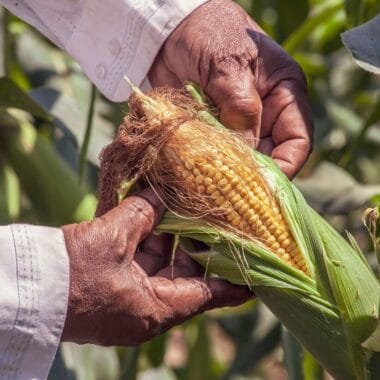
Meanwhile, smallholders can adopt cost-effective methods for producing microbial inoculants. In Nakuru, Kenya, maize farmers began culturing Rhizobium spp. using compost and molasses as growth media. This community-led initiative increased phosphorus availability in acidic soils by 30% and boosted maize yields by 25% within a single season (Mwangi et al., 2023).
Additionally, integrating organic amendments such as compost or manure helps support microbial activity, creating a synergistic effect. Farmers in Tamil Nadu, India, combined locally prepared microbial cultures with organic fertilizers, improving soil health and reducing fertilizer dependency (Ramesh, 2023).
Overcoming Challenges to Adoption
While the benefits of biological solubilization are clear, challenges such as limited awareness and variable field performance remain. Many farmers are unfamiliar with microbial technologies or skeptical of their efficacy. Addressing these gaps requires robust education and outreach programs. Demonstration projects showcasing the success of microbial solutions can also encourage adoption.
Moreover, inconsistencies in field performance due to environmental factors can be mitigated through research into region-specific microbial strains. For example, matching Bacillus spp. to alkaline soils and Pseudomonas spp. to acidic soils ensures better results.
Governments and agribusinesses play a vital role in promoting adoption. Subsidies for biofertilizers and investments in local production units can make these technologies accessible to resource-constrained farmers.
Future Directions in Sustainable Phosphorus Management
The future of biological phosphorus solubilization is bright, with innovations in microbial biotechnology paving the way for even more efficient solutions. Multi-strain biofertilizers, combining bacteria and fungi for synergistic effects, are under development. In addition, digital agriculture tools, such as AI-driven soil monitoring systems, promise to optimize the timing and application of microbial inoculants.
Collaborative efforts between governments, research institutions, and private companies are essential to scaling these technologies globally. By investing in sustainable phosphorus management, the agricultural sector can ensure long-term productivity and environmental stewardship.
Conclusion
Unlocking the vast reserves of phosphorus in soils through biological solubilization represents a breakthrough in sustainable agriculture. By adopting microbial solutions, farmers can reduce input costs, enhance crop yields, and protect the environment. From large-scale agribusinesses in Brazil to smallholders in Kenya, the transformative potential of these natural solutions is undeniable.
At AA Biotek, we specialize in innovative microbial solutions tailored to your needs. Contact us today to learn how our biofertilizers can revolutionize your farming practices and unlock the full potential of your soil.
References
- FAO. (2021). Global phosphorus trends and challenges in agriculture. Retrieved from FAO Website.
- Kumar, A., et al. (2021). Application of phosphorus solubilizing microorganisms in wheat farming: Results from Punjab, India. Agronomy Journal, 113(5), 876-884.
- Mwangi, P. (2023). Community-based phosphorus solubilization in Kenyan maize farming. African Agriculture Review, 15(2), 55-63.
- Ramesh, K. (2023). DIY microbial solutions for smallholder farms in Tamil Nadu. Indian Agriculture Digest, 14(3), 45-52.
- Silva, C., et al. (2022). Integrating biofertilizers in soybean production: Insights from Brazil. Journal of Sustainable Agriculture, 19(4), 123-134.